EN
EN

Tour
Literary hiking trail L1 "Freiligrath Way"
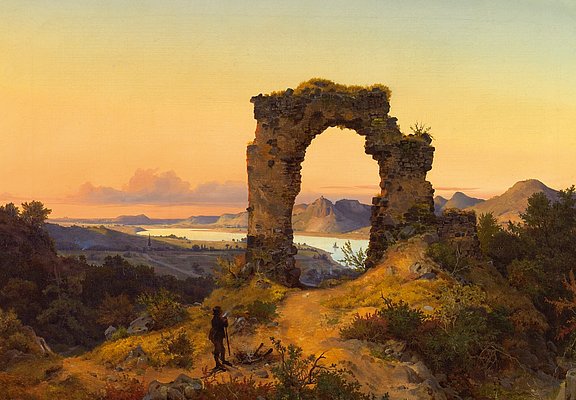
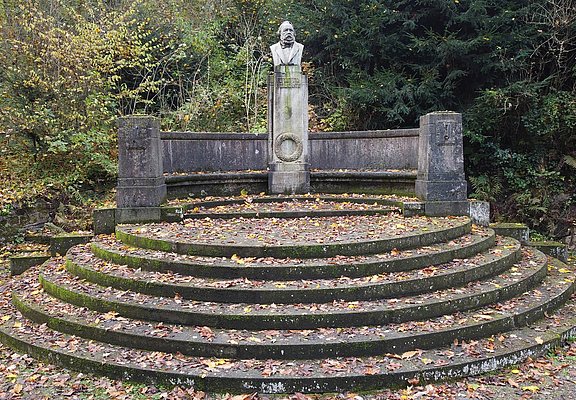
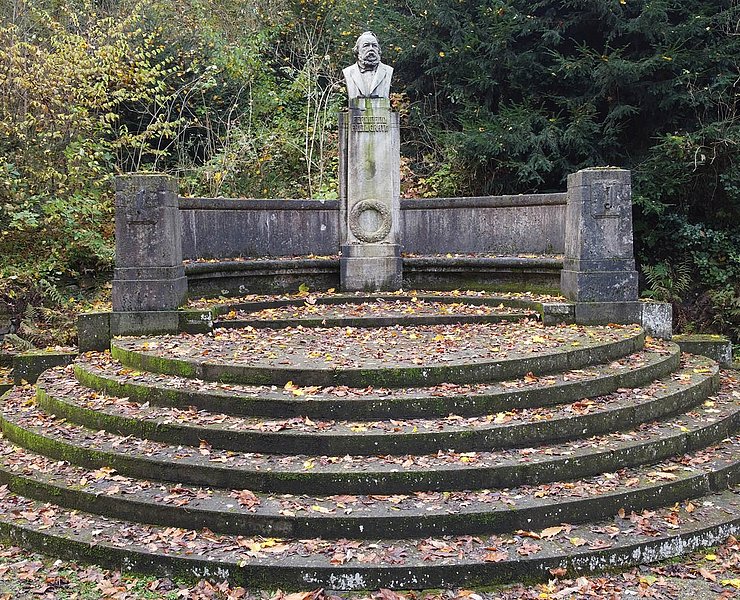
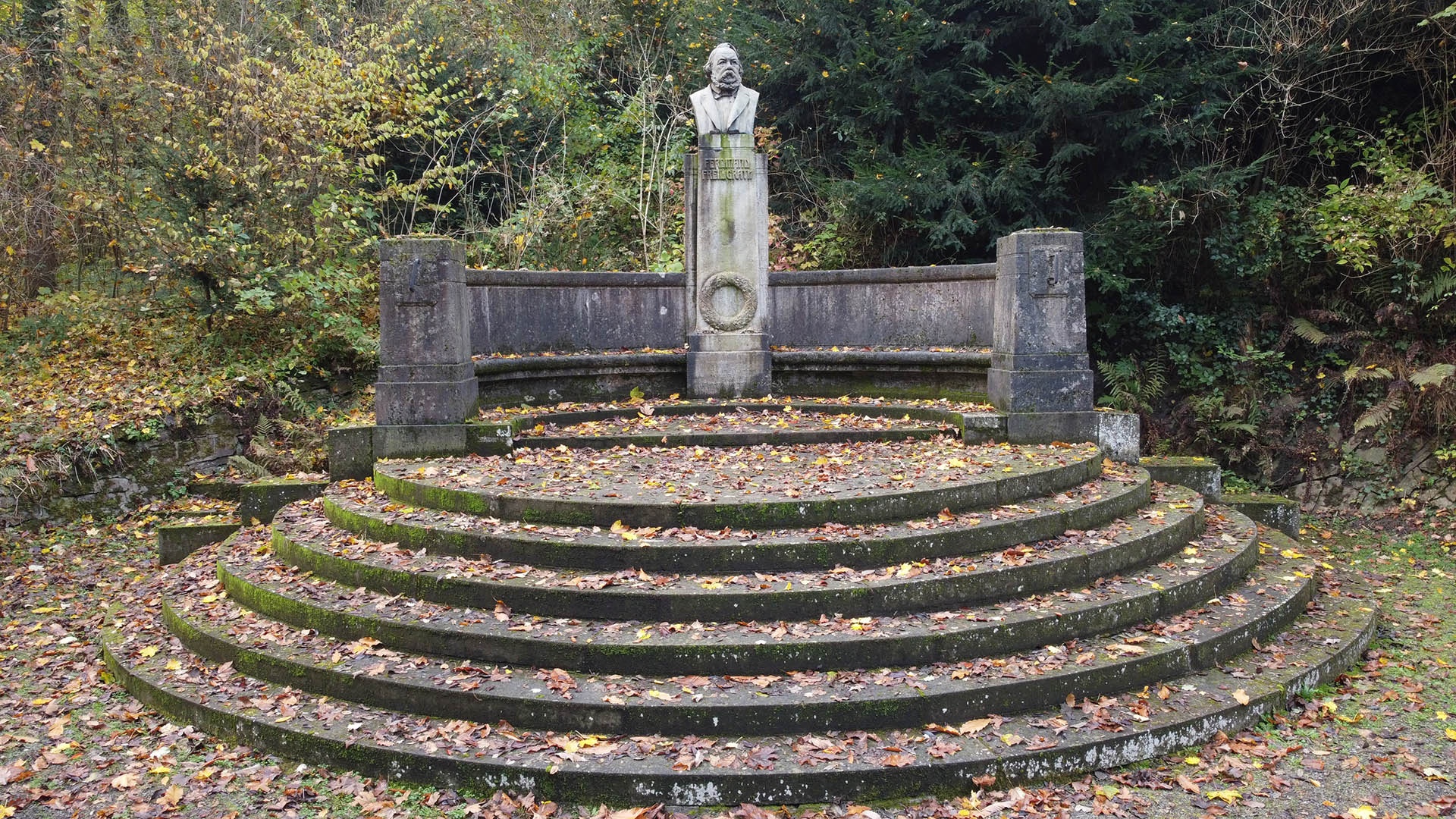
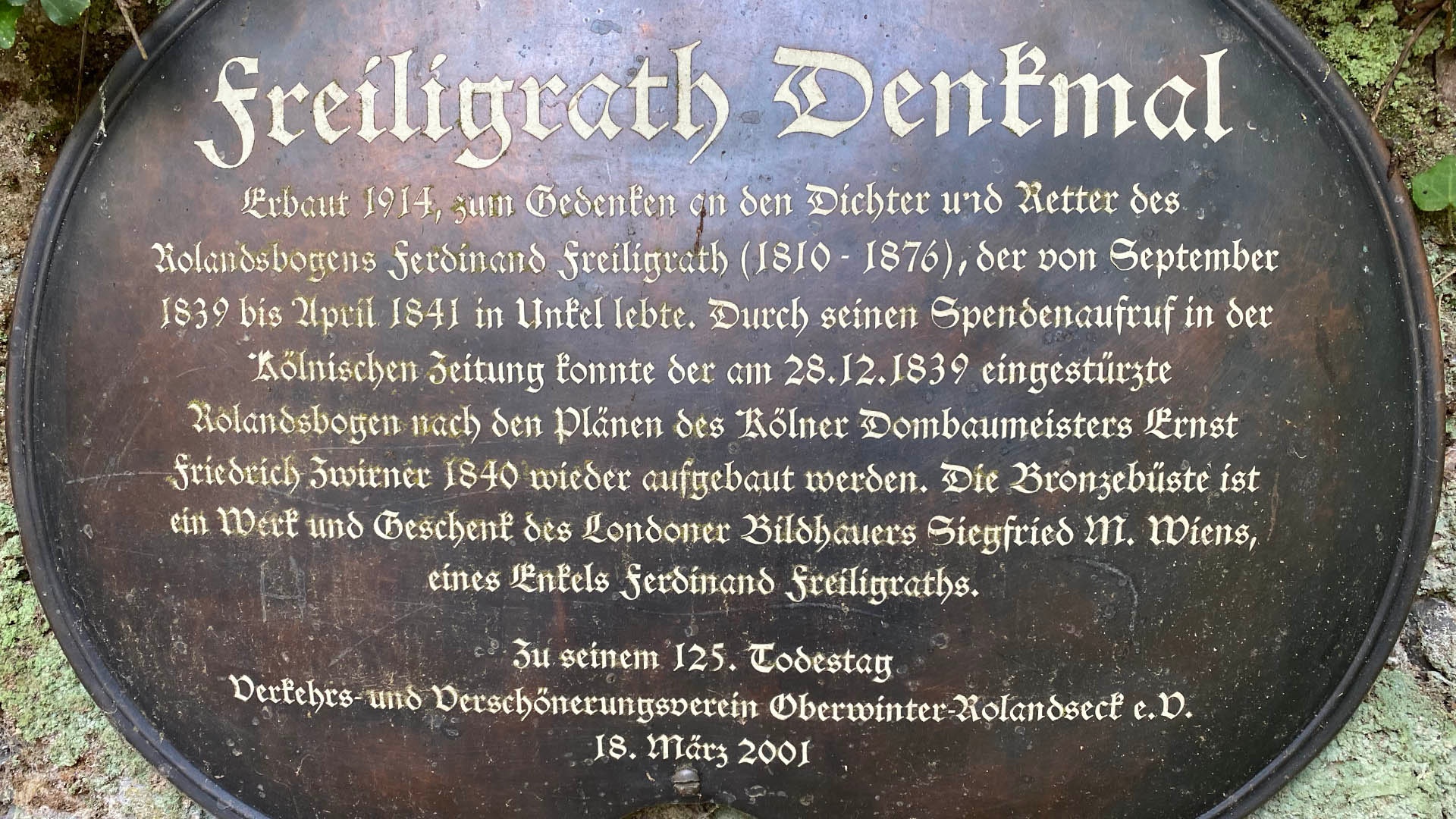
The route begins with the ascent to the Rolandsbogen and passes by the Freiligrath Monument, which is located about halfway up to the Rolandsbogen.
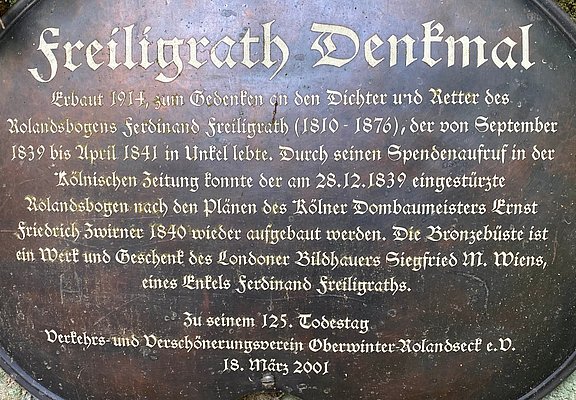
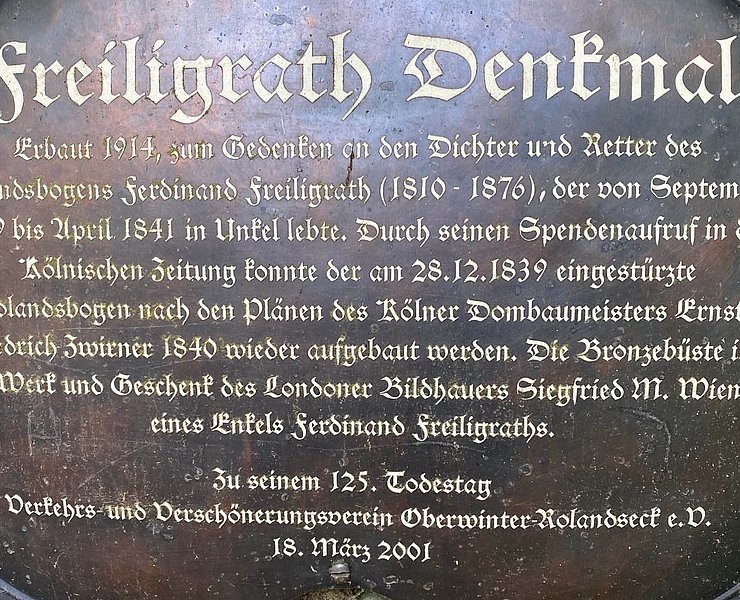
The poet Ferdinand Freiligrath (1819 to 1876) initiated a fundraiser for the reconstruction of the Rolandsbogen, which had collapsed in 1839. He became nationally known in Germany as the poet of the 1848 revolution. This largest and most beautiful monument dedicated to Freiligrath was planned from 1910 by a committee whose chairman and driving force was Freiligrath's godson, Ferdinand Groyen, from the well-known Rolandseck hotelier family. The components were designed in 1912 by the Cologne architect Karl Colombo in an Art Deco style. The bronze bust was designed in the same year by Freiligrath's grandson, the English sculptor Siegfried M. Wiens. The monument, like all Freiligrath monuments in Germany, depicts the aged poet who returned from exile, having made peace with the state and the state with him, and was inaugurated on June 17, 1914 – his 104th birthday. The monument originally stood freely in vineyards and later orchards but is now surrounded by dense forest.
Rolandseck (16th and last stanza)
O, let the admonition not be in vain!
I stand and demand: Everyone one stone!
It concerns the knight and it concerns the nun!
It concerns love and it concerns loyalty!
Clutch your heart, all who hear me! – Come,
That anew the arch may sparkle in the sun!
Once again I call: Everyone one stone!
I want to be the knight's treasurer!
O, honor the Rhine's most wonderful legend!
With love and oath, with poetry and kiss,
Hear my admonition: your contribution!
Bring your rock - Roland's arch rise!
Ferdinand Freiligrath (1810-1876)
Appeal for donations in Cologne newspaper, January 12, 1840
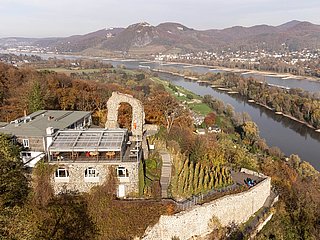
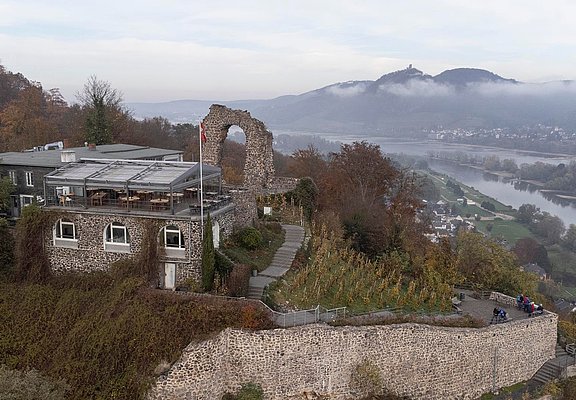
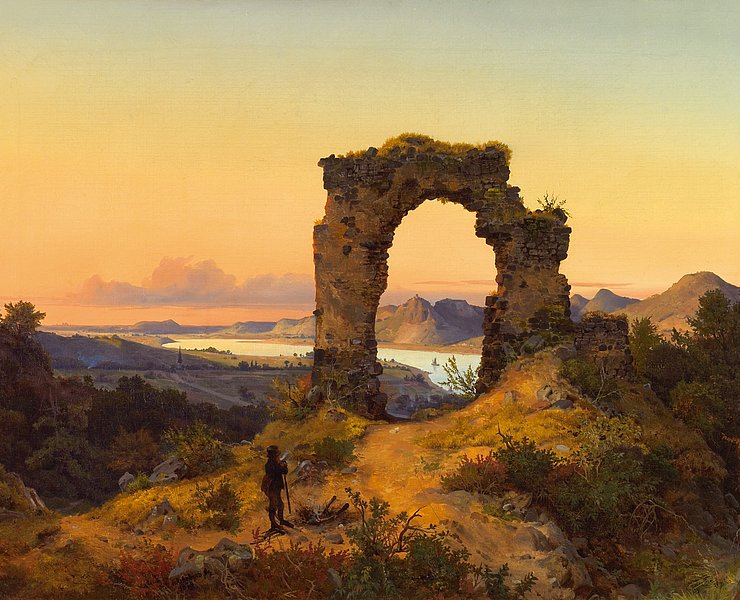
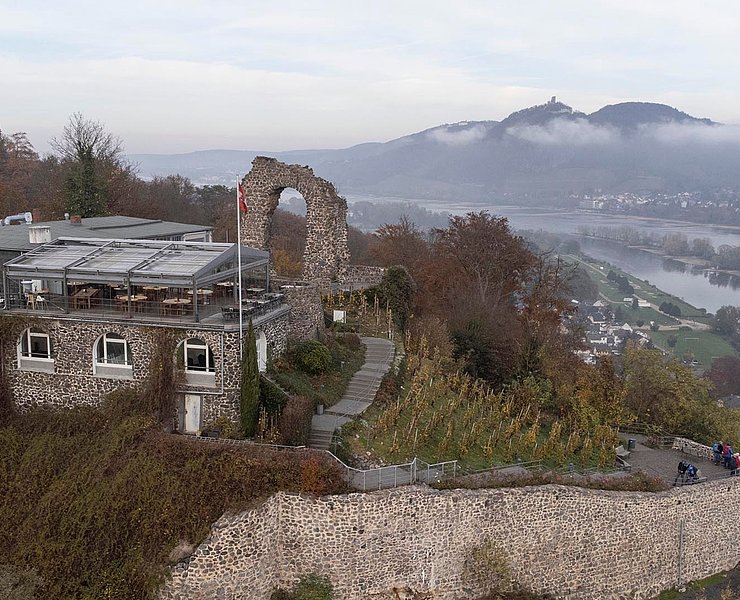
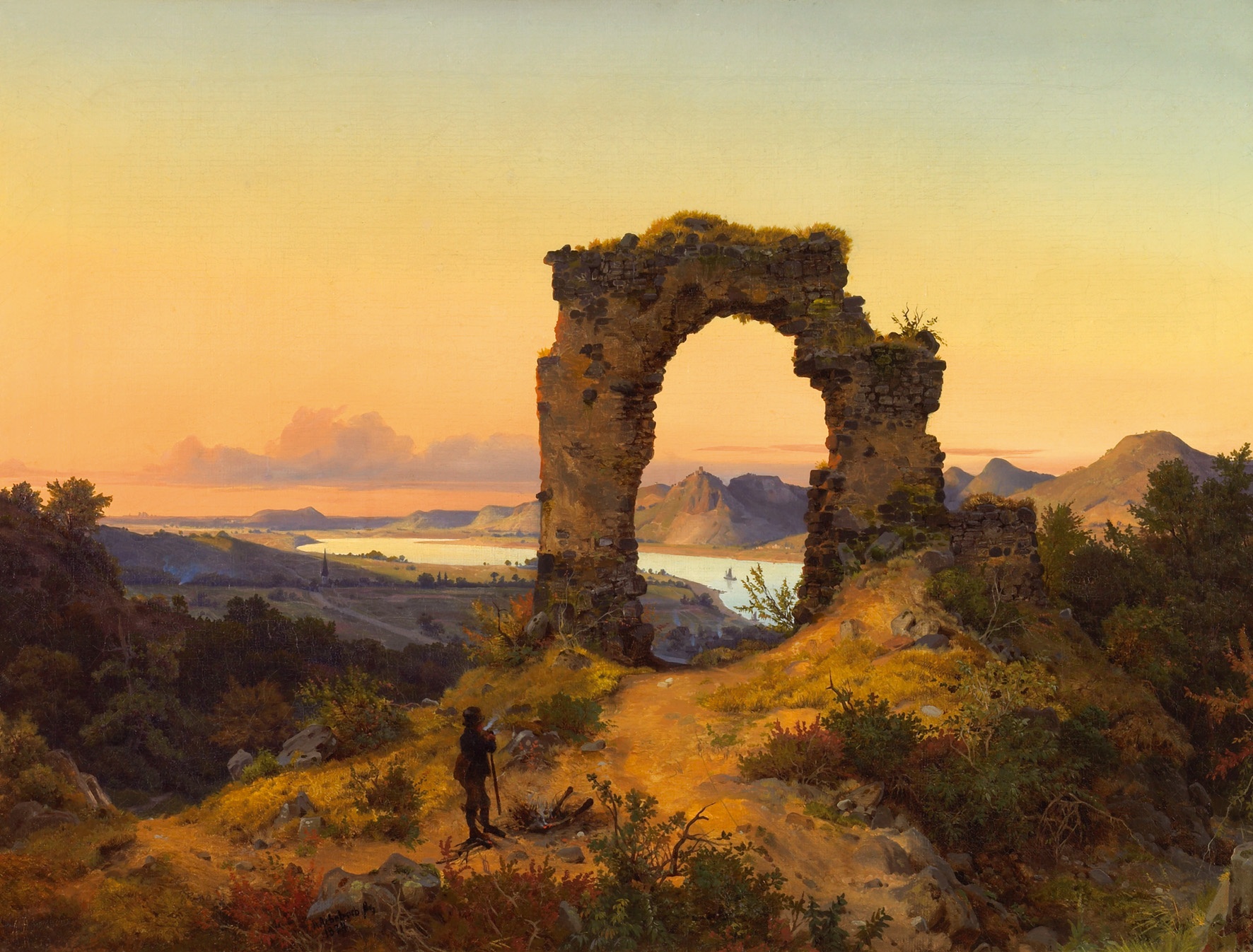
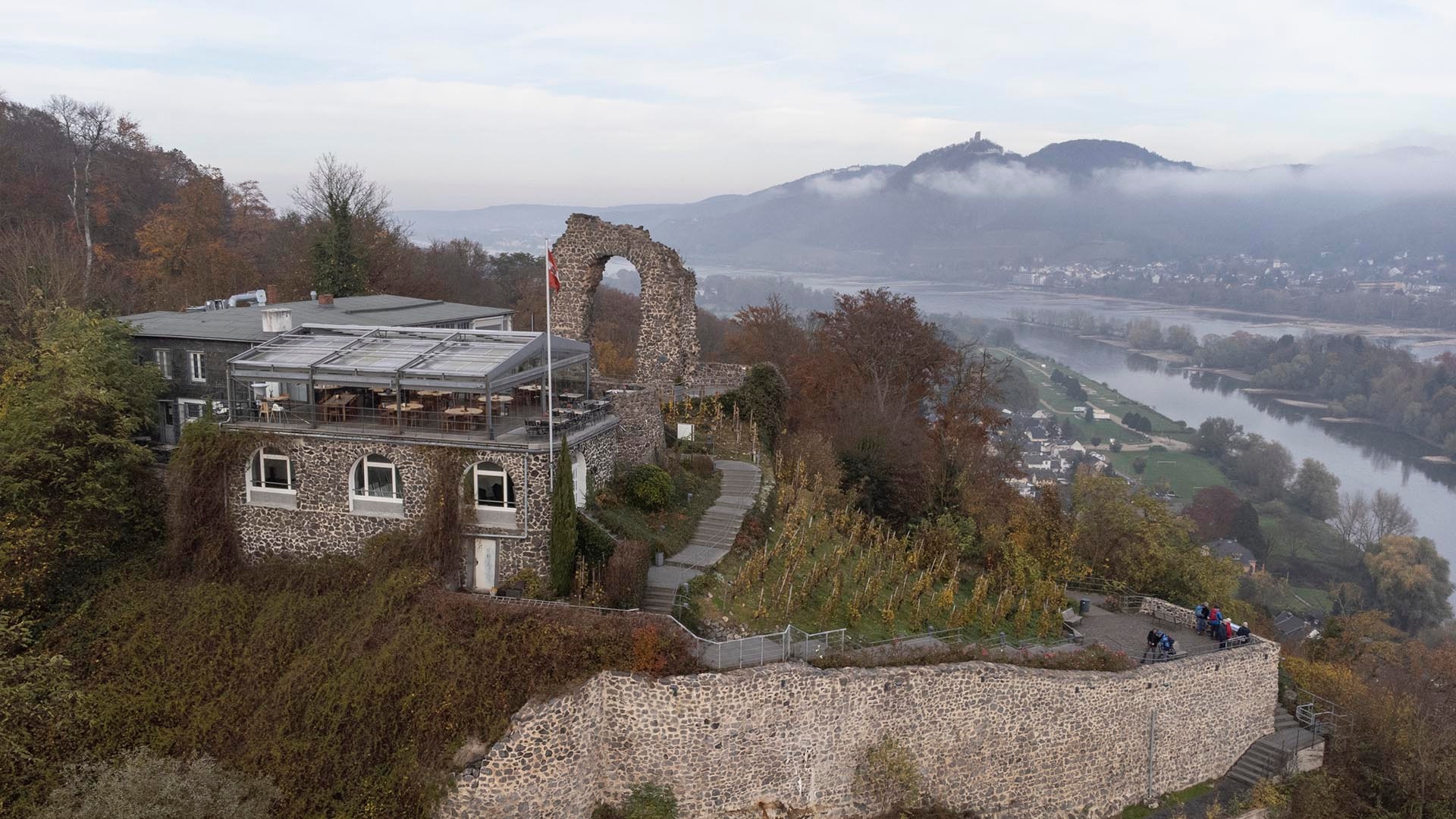
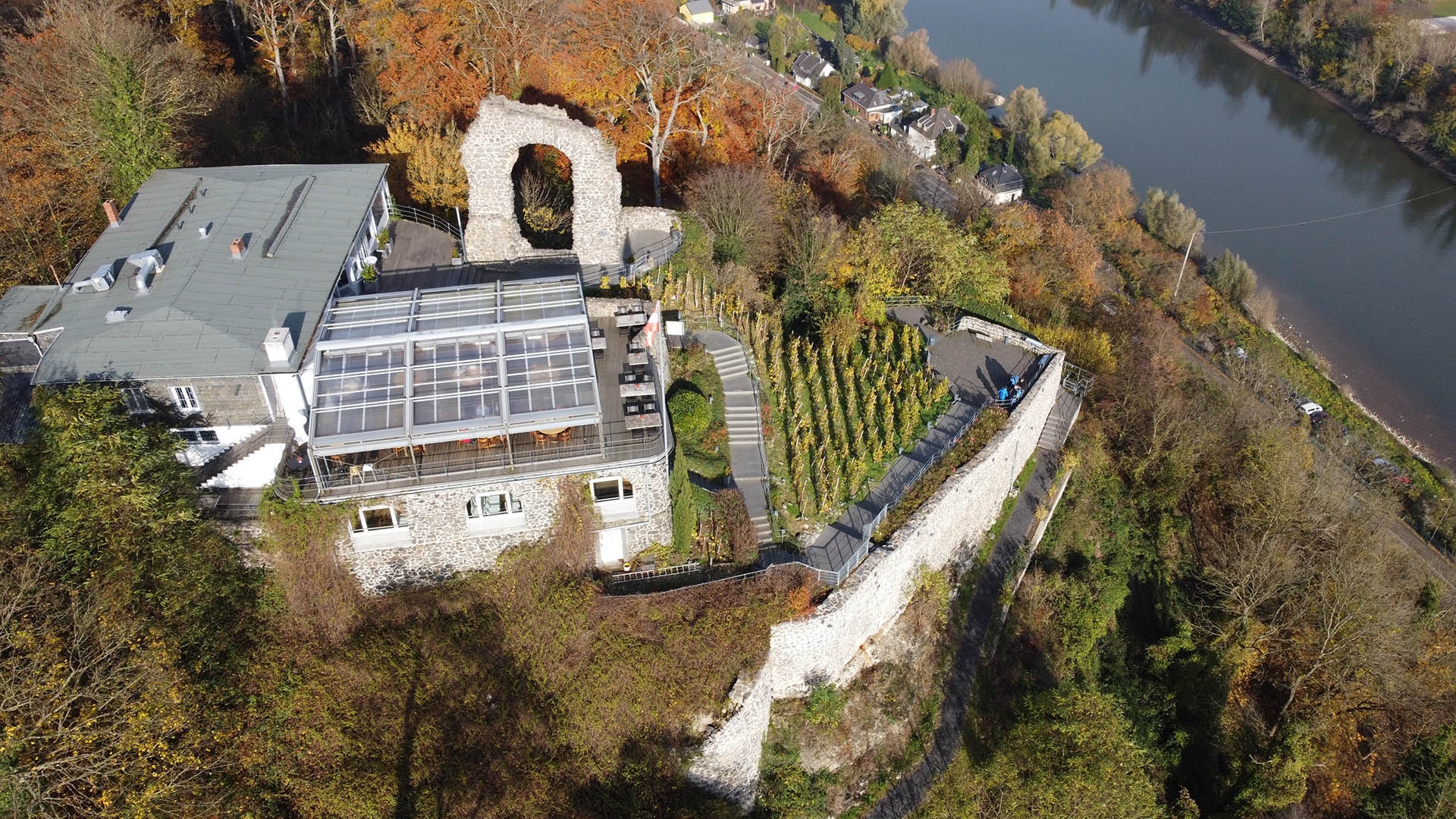
The route continues upward to the Rolandsbogen, an important symbol of German Rhine Romanticism.
Remnants of the old foundations still show the slight rotation with which cathedral master builder Friedrich Zwirner in 1840, during the reconstruction of the partly collapsed arch, positioned the monument in a better viewing position opposite the steamers approaching from the north and south. The poet Freiligrath would likely not have liked this, as the opening of the arch was originally oriented from the island – where according to legend the knight Roland should have looked out from the window arch – towards the Drachenfels. The literary connection was already sacrificed for tourism back then.
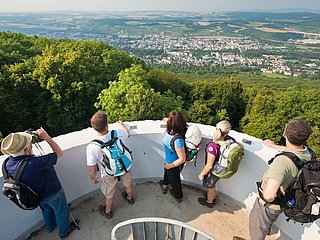
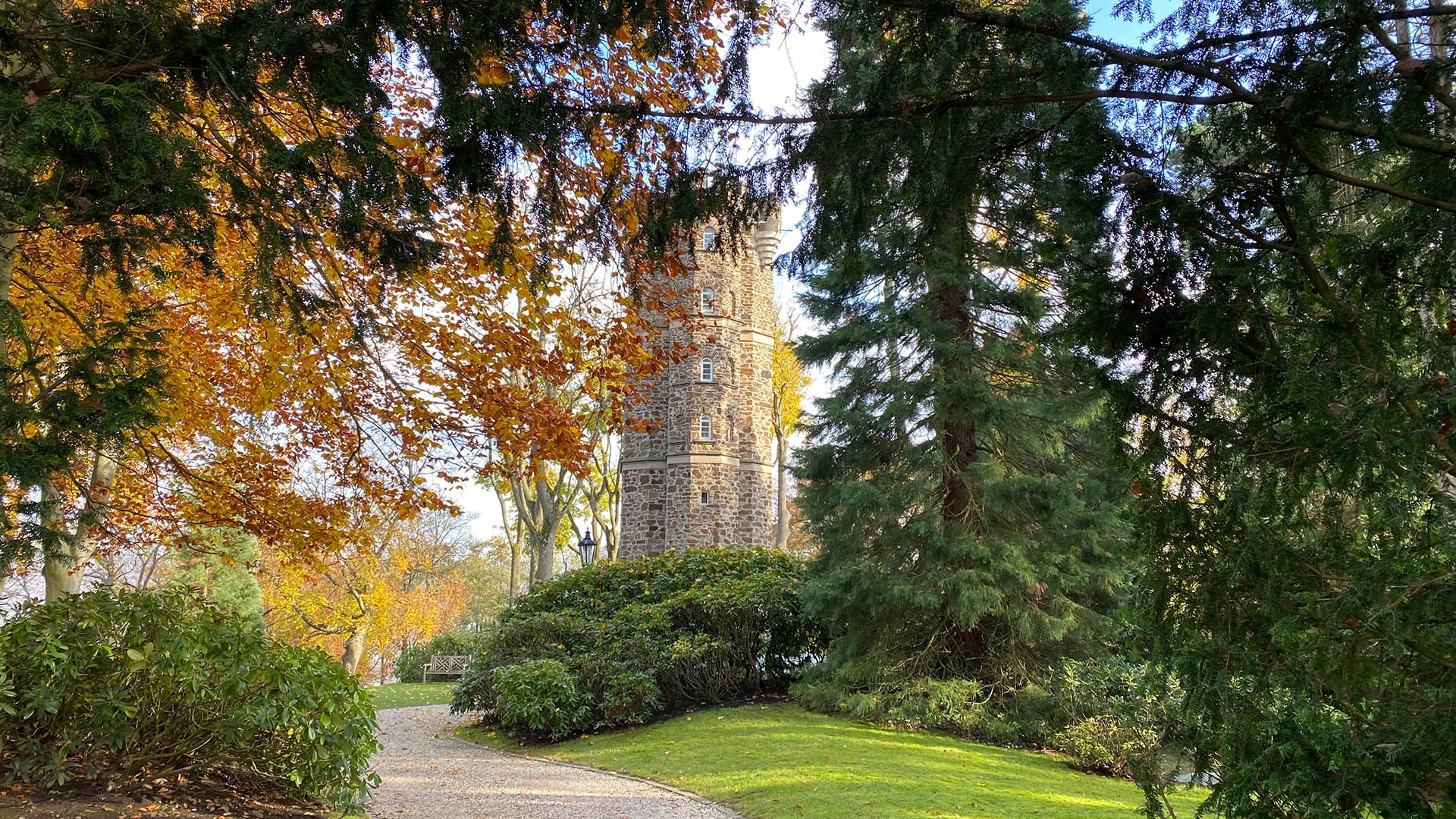
Here, a restaurant with a splendid panoramic terrace invites you to take a break. Above the Rolandsbogen, you can catch a glimpse of the Humboldt Tower.
The route leads downhill again from the Rolandsbogen to Rolandswerth. Once back at the Rhine, a short detour to the "secret gardens of Rolandswerth" is worthwhile.
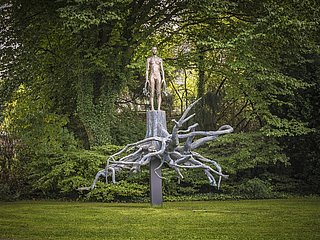
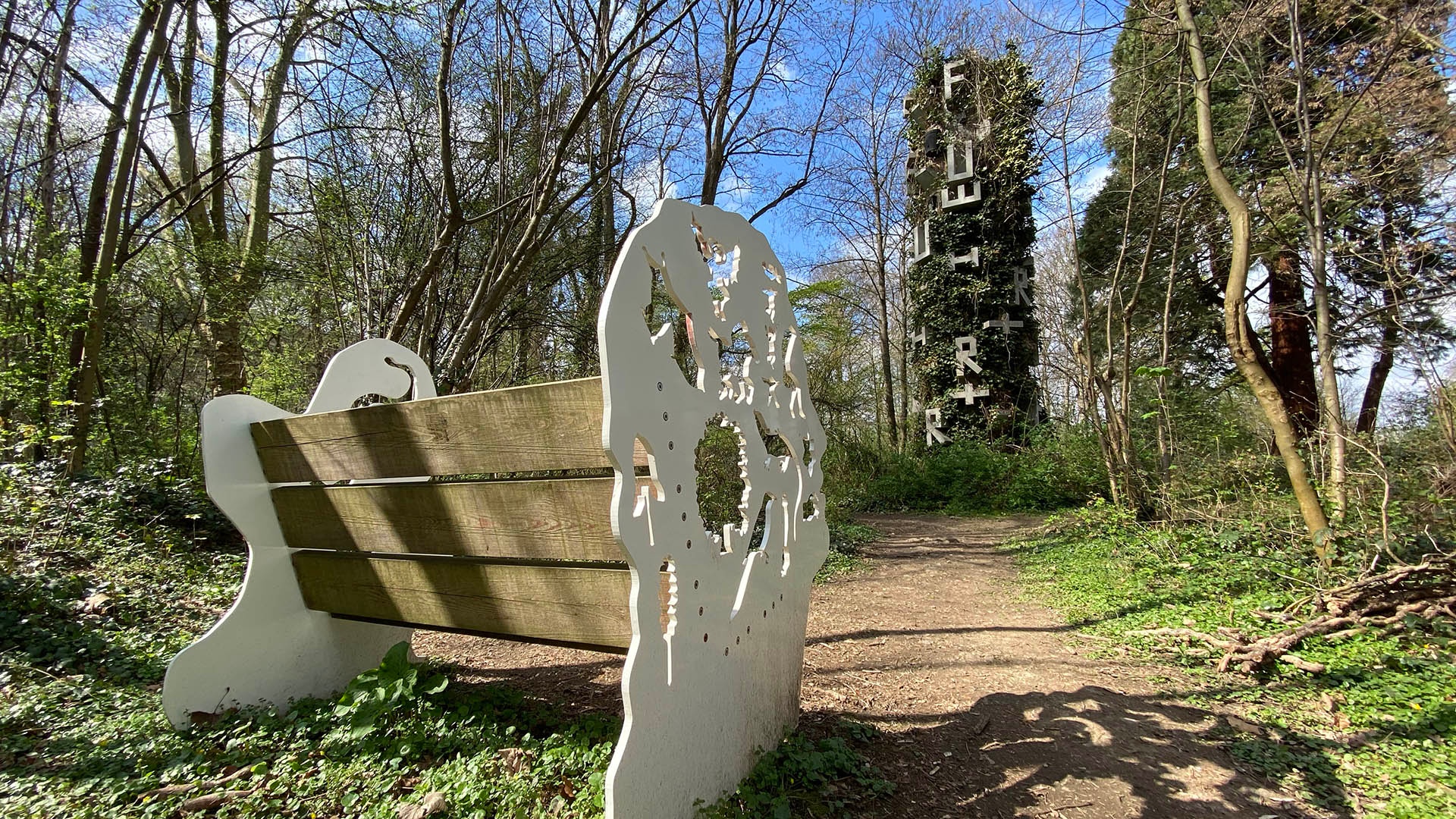
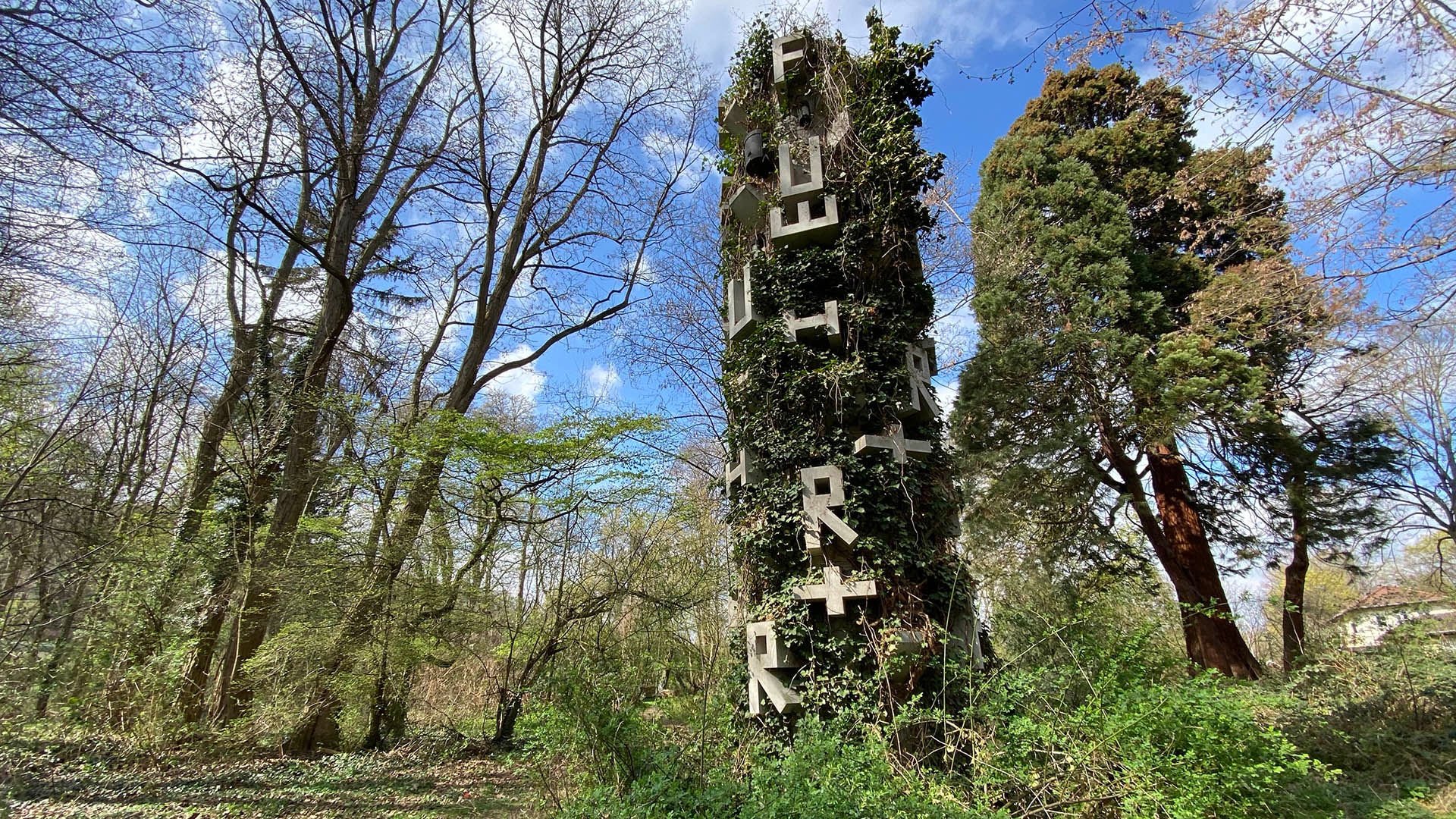
The small park of the former Villa Hentzen, which also served as an ambassador's residence, dates back to an art project by artists Caroline Bittermann and Peter Duka from 2004 and is part of the Remagen Sculpture Shore. The sculptures and the gradual reclaiming of the area by the forest from the overgrown park have created a complete artwork that reflects and invites meditation on the "mysterious" sentence from the poet-philosopher Novalis in his "Allgemeiner Brouillon" of 1798: "Perfect speculation leads back to nature."
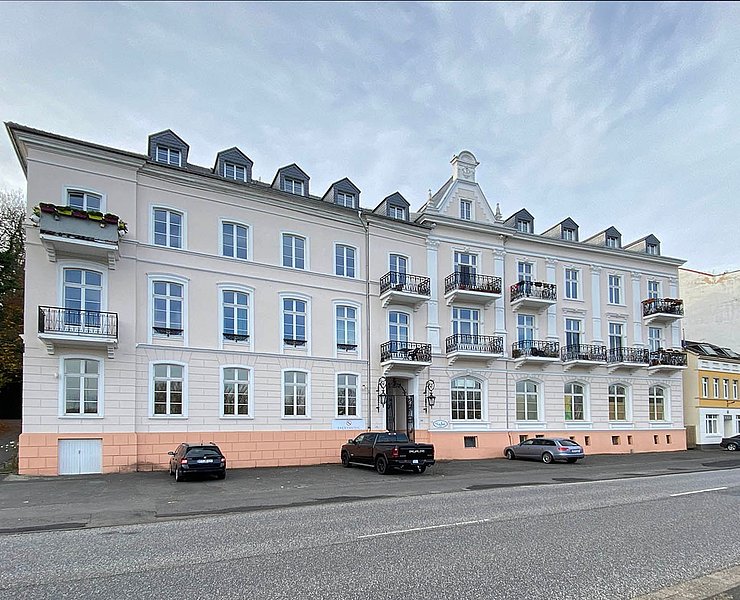
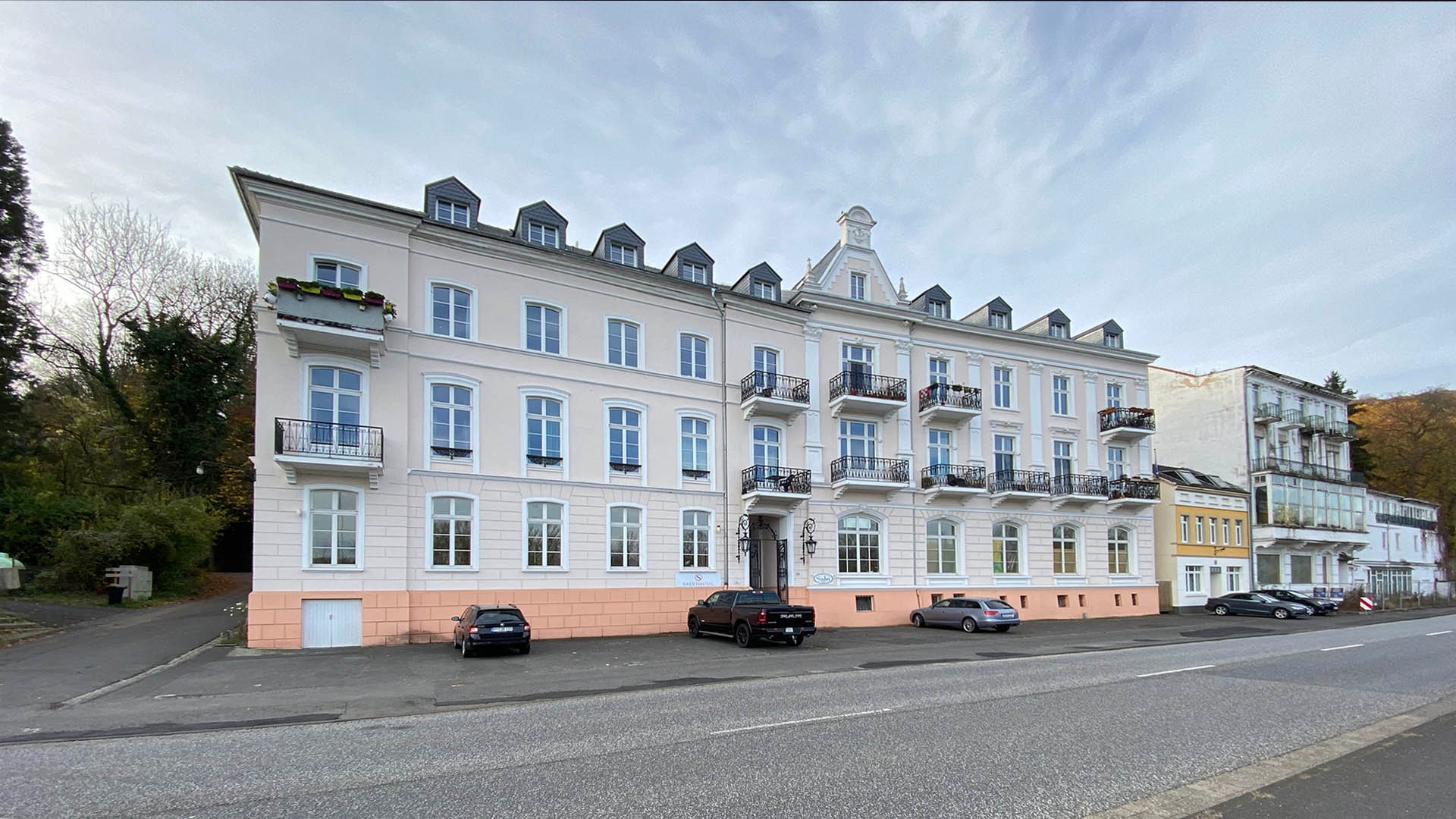
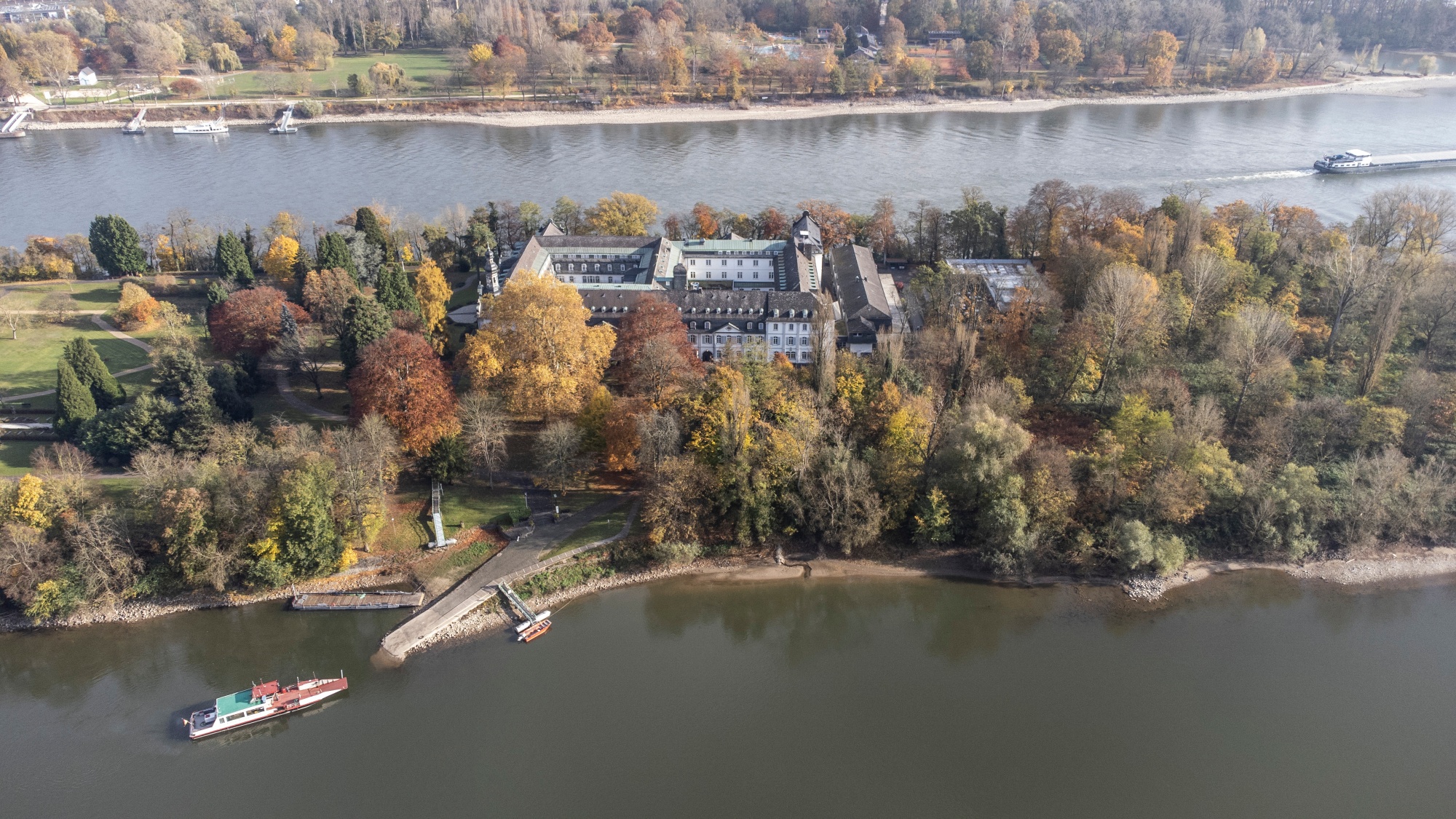
Our route now follows the Rhine back to Rolandseck and ends at the starting point of the hike at the parking lot opposite the island of Nonnenwerth.
- ZG Vielseitig Aktive (L)
- ZG Aktive Naturgenießer (L)
- ZG Kultur- und Landschaftsliebhaber (L)
- ZG Nur Wanderer (L)
- Hiking trail
- Hiking

source
Mittelrhein
·
Author:
Tourist-Information Remagen