EN

Silberpfeil
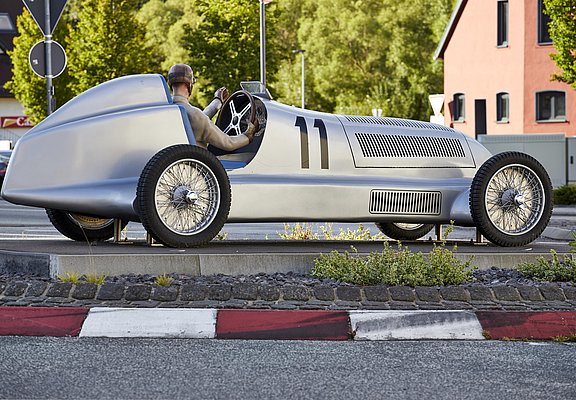
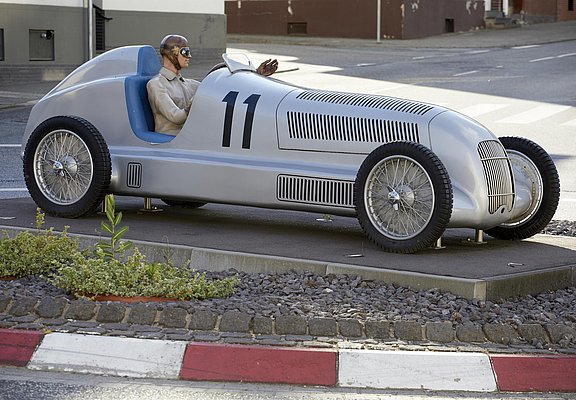
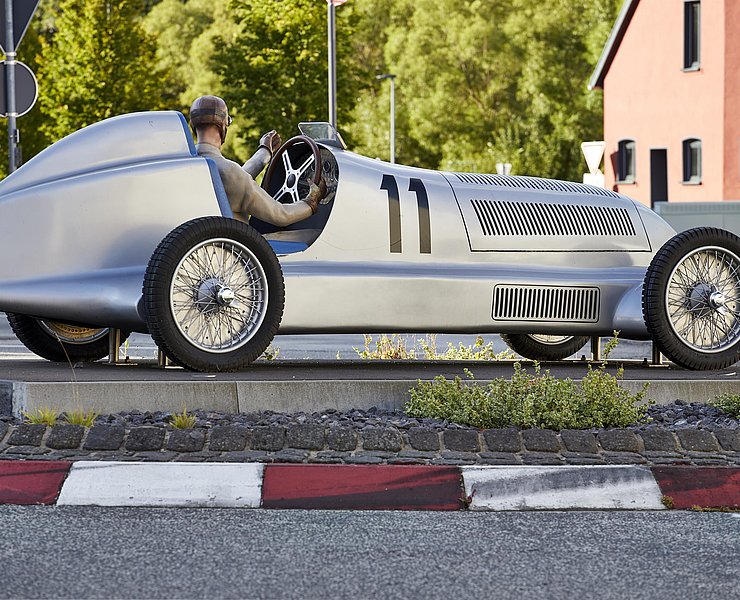
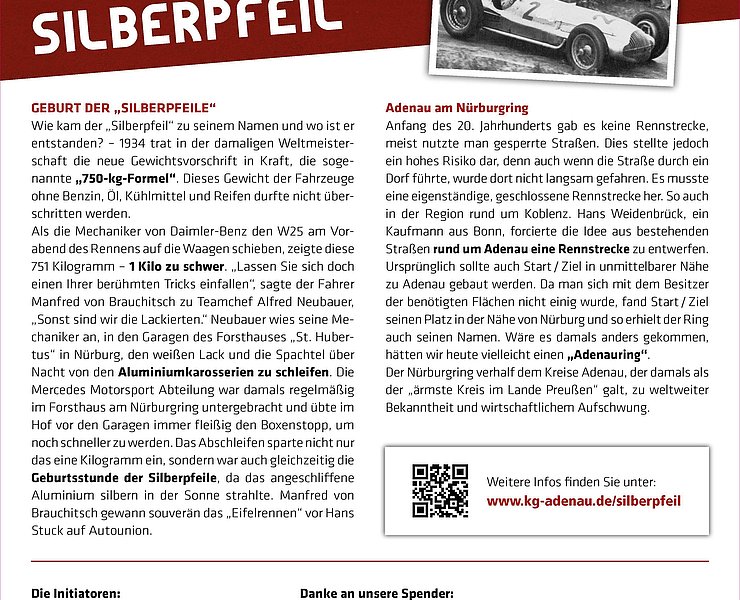
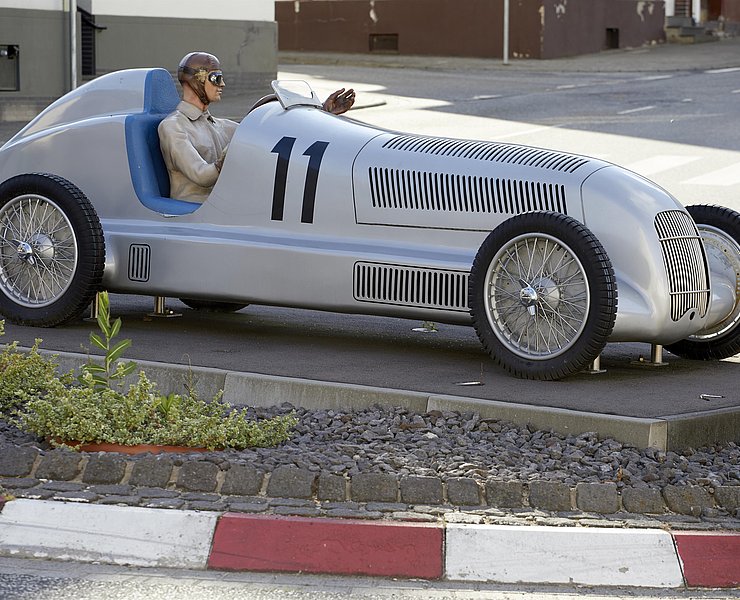
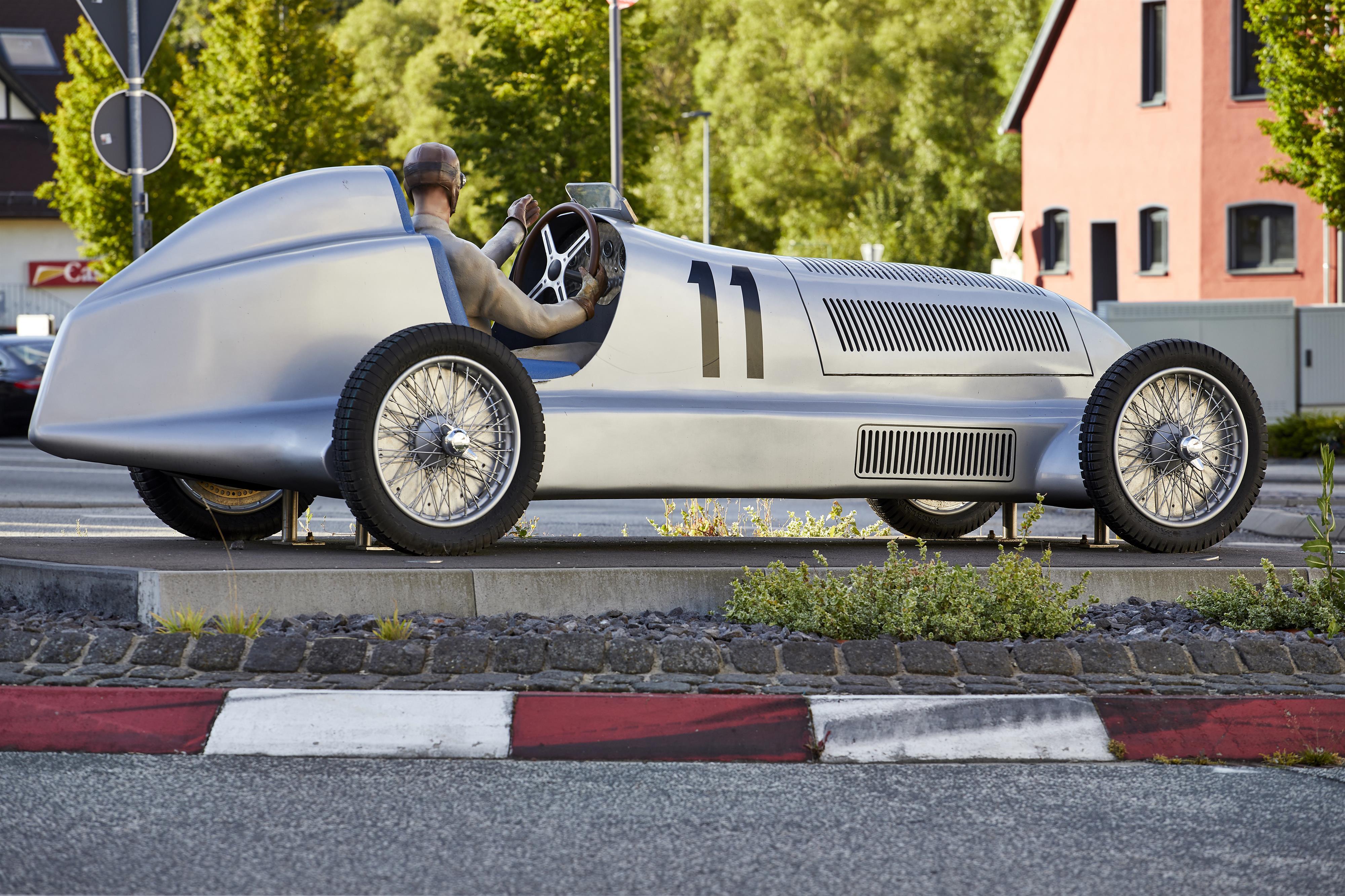
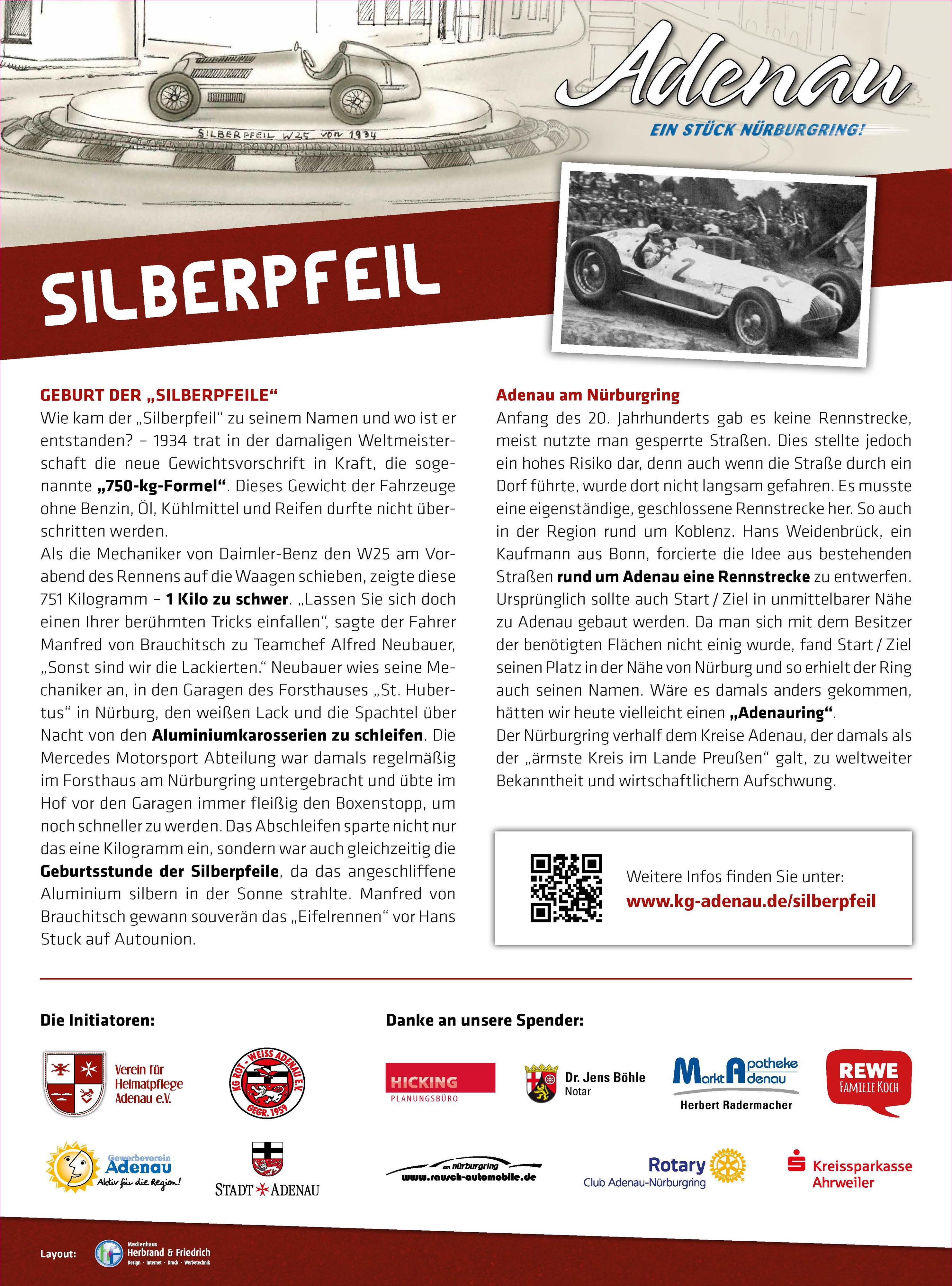
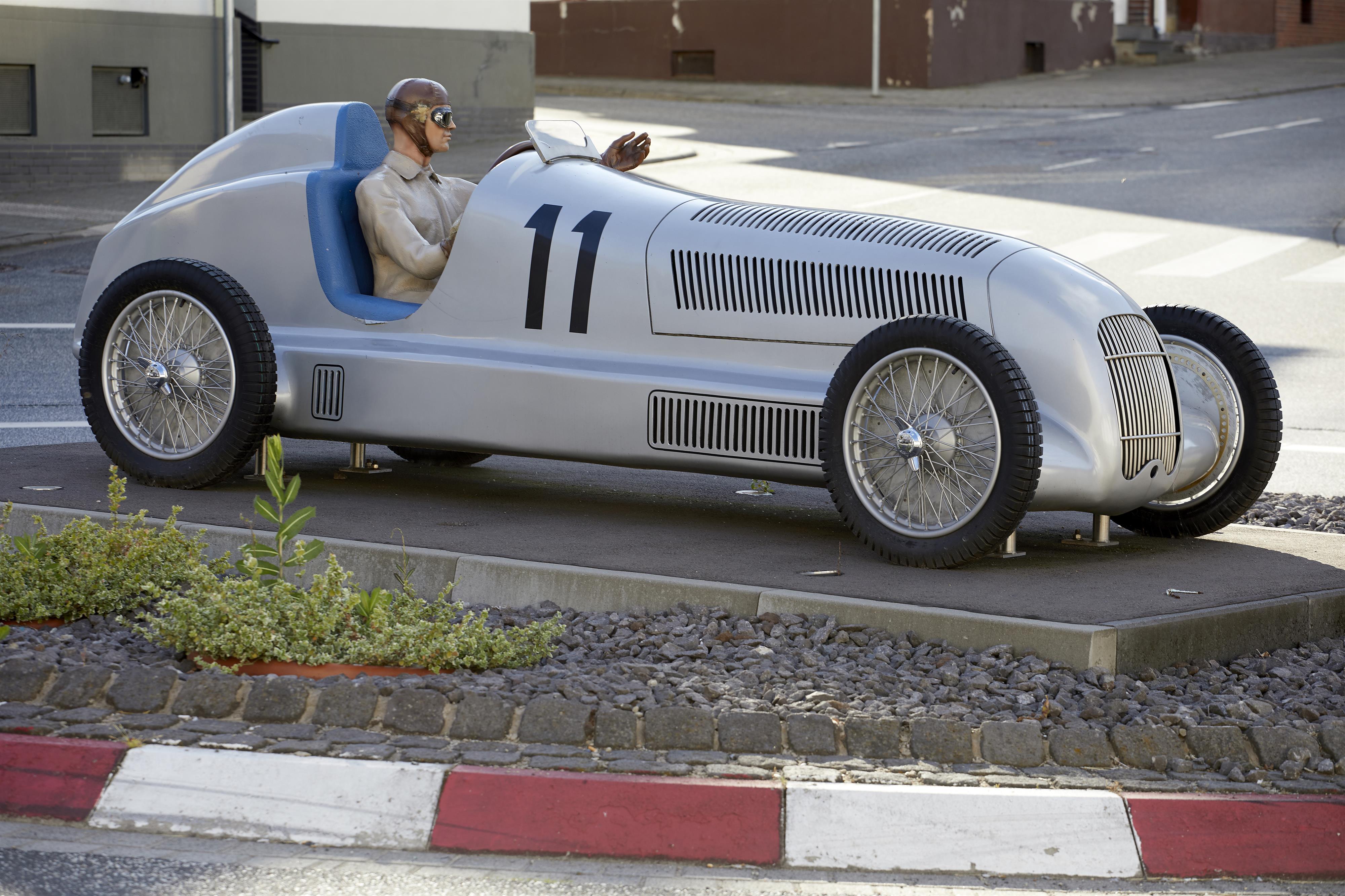
BIRTH OF THE "SILVER ARROWS" How did the "Silver Arrow" get its name and where did it originate? – In 1934, the new weight regulation known as the "750-kg formula" came into effect in the then World Championship. This weight of the vehicles, without fuel, oil, coolant, and tires, could not be exceeded. When the mechanics from Daimler-Benz pushed the W25 onto the scales the night before the race, it showed 751 kilograms – 1 kilo too heavy. "Why don't you come up with one of your famous tricks?" said driver Manfred von Brauchitsch to team principal Alfred Neubauer, "Otherwise, we'll be the painted ones."
Neubauer instructed his mechanics to sand off the white paint and filler from the aluminum bodies overnight in the garages of the forest house "St. Hubertus" in Nürburg. The Mercedes Motorsport department was regularly housed in the forest house at the Nürburgring at that time and always practiced pit stops diligently in the courtyard in front of the garages to become even faster. Sanding not only saved the one kilogram but also marked the birth of the Silver Arrows, as the sanded aluminum shimmered silver in the sunlight. Manfred von Brauchitsch confidently won the "Eifel Race" ahead of Hans Stuck in the Auto Union. Adenau at the Nürburgring, at the beginning of the 20th century, had no racetrack; mostly, closed roads were used. However, this posed a high risk, as even if the road went through a village, it wasn't driven slowly. A standalone, closed racetrack was needed. This was also the case in the region around Koblenz. Hanns Weidenbrück, a merchant from Bonn, pushed the idea of designing a racetrack from existing roads around Adenau. Originally, the start/finish was also supposed to be built close to Adenau. Since an agreement could not be reached with the owner of the required areas, the start/finish found its place near Nürburg, thus giving the ring its name. Had things turned out differently back then, we might today have an "Adenau Ring." The Nürburgring brought worldwide fame and economic upturn to the district of Adenau, which at that time was considered the "poorest district in the Land of Prussia."
Address
| Montag – Sonntag | 00:00 - 00:00 Uhr |
All-season open